Updated 21 February 2026 for the 2026 MotoGP season: riders can still adjust power, engine braking, fuelling and traction via the handlebar controls, and 2026 remains the final season where rear ride-height/holeshot devices are used before they’re banned from 2027.
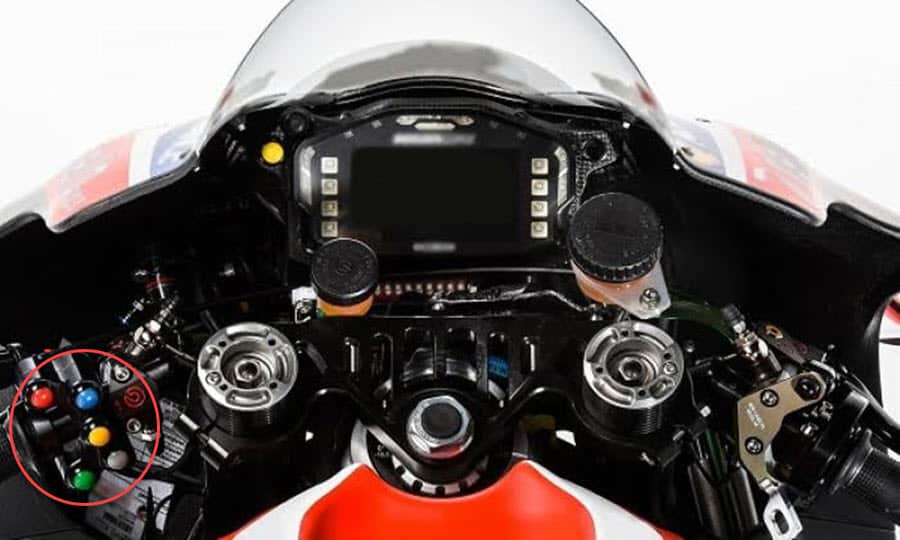
Beneath the windshield of a MotoGP bike sits a dashboard and a series of buttons to assist riders to control the bike beyond the standard throttle and braking levers.
These buttons are, for the most part, out of the viewer's field of vision.
They also differ slightly in position, amount and colour from manufacturer to manufacturer but perform basically the same functions.
These colourful buttons are known by a few names such as mapping panels or buttons, switch panels and strategy buttons.
Let’s find out what this system does for the riders during a race and why they are important.
First, we need to understand why these controls are in place and where they can be found on the bike.
Data collected during practice and qualifying helps to set the bike to suit the conditions at the start.
However, much occurs during a race. Tyres and brakes wear. The bike becomes lighter as fuel is consumed.
With weather conditions that could change rapidly as well as the small matter of other riders battling with you and a host of other variables mean changes must be made during the race and riders do not have the benefit of a pit stop to make these adjustments.
The colourful buttons you may catch a glimpse of on the rider’s handlebars are their mapping programme controls.
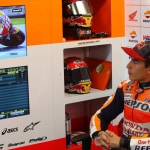
While a rather small LCD screen serves as the dashboard tucked up beneath their windshield.
This screen displays important information such as temperature, RPMs, track temp, best lap times and which mapping programme they are currently using.
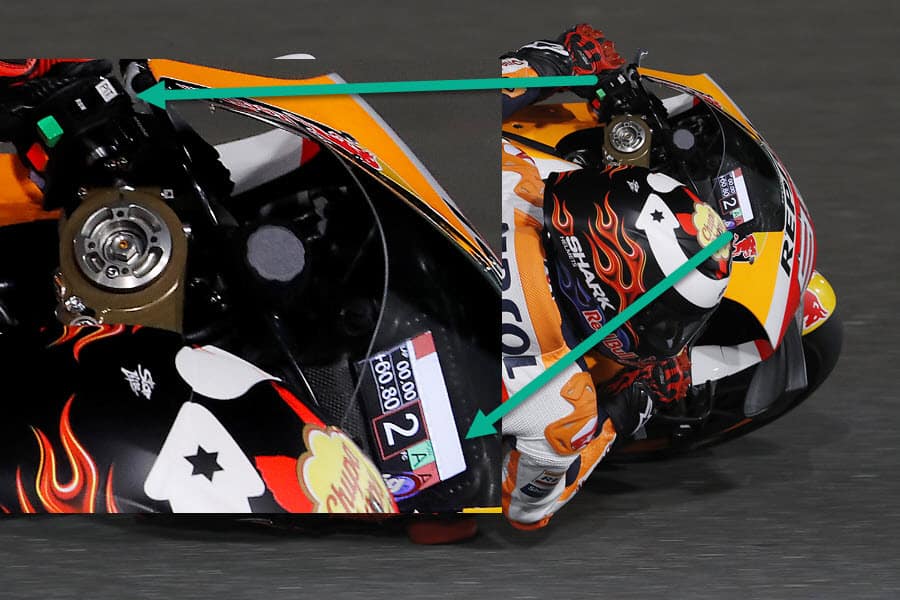
Image courtesy of Box Repsol on Flickr
Their team can also communicate certain messages to them on this screen. Along with their pit board it is their only real source of information during the race.
There is limited opportunity for a rider to view what the system is telling them on this dashboard.
This is one reason teams try not to relay too many additional messages to their riders during the race so that they are left to concentrate on the job at hand.
We should consider how much finesse is required by the rider to look at this screen, make a decision on which adjustments need to be made to achieve their desired outcome.
All this whilst riding on the limits of adhesion or at maximum speed!
The straights can provide a few seconds of time but when you are riding at more than 300 km/h, it’s a skill that takes a lot to master but master it they do and by doing so they can change the performance of their bike to immediately adapt to new conditions or situations.
Some riders like a lot of their data to be displayed during the entire race, such as best lap time and engine maps selected. Whereas other riders prefer limited information and use lights instead.
The system is highly adaptable to what each rider prefers.
So, what exactly can they control during the race via these buttons?
Engine Brake Mapping provides the rider with the ability to adjust the throttle response and remove power from the engine therefore conserving their brakes. This adjustment can also help conserve fuel and manage the rear tyre to stop it from sliding around so much.
Traction Control Mapping functions mostly as a safety feature to provide better traction during acceleration. This can be very useful when it rains or if there are other issues maintaining the tyres for the duration of the race.
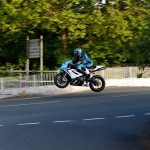
Anti-Wheelie or Launch Control Mapping can reduce the power to the engine when it recognises the front tyre has left the track surface. A rider can choose to have the bike respond slightly or aggressively depending on the real time needs of the rider and what they are trying to achieve at the time.
Fuel Adjustments have an impact on the throttle opening and how much fuel will be used. This can be incredibly useful for certain tracks such as Motegi and Austria where getting to the finish line can take some finesse with the settings of the bike.
The Pit Limiter Button is used to bring the bike down to speed for pit lane entry. It can also be used at other times. And finally, the kill switch (usually black) as part of the rider’s controls to shut the engine down if required.
There’s also a separate control for ride-height/holeshot systems.
In modern MotoGP these are mechanical/hydraulic devices that can lower the bike for better acceleration and reduced wheelies.
Rule-wise, front ride-height devices were banned in-race from 2023 and are only permitted for the race start (as part of a holeshot device). Rear ride-height devices can still be used during the race in 2026, but from 2027 all ride-height and holeshot devices will be banned.
Much more information about the ride height devices is available in our article here.
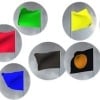
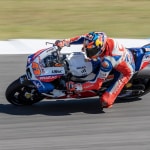
Looking at the 2025 Pramac Ducati the colours of the buttons are as follows: Yellow adjusts the Fuel usage, Blue controls the launch or traction control, Red adjusts the Engine Power Programme and Green is for the Engine Brakes.

Image courtesy of Pramac Racing
Many teams simplify rider choices into a few main “modes” (often three primary positions), with additional fine-tuning done by the engineers in the background.
The rider then scrolls between the pre-set options depending on grip, tyre wear and fuel targets.
Button colours aren’t standardised across MotoGP – they vary by manufacturer, team and even rider preference.
As one example layout, you’ll often see a “power mode” button, an “engine brake” button and a “fuel/mixture” button grouped together, plus separate controls for launch/pit limiter/ride-height depending on the bike.
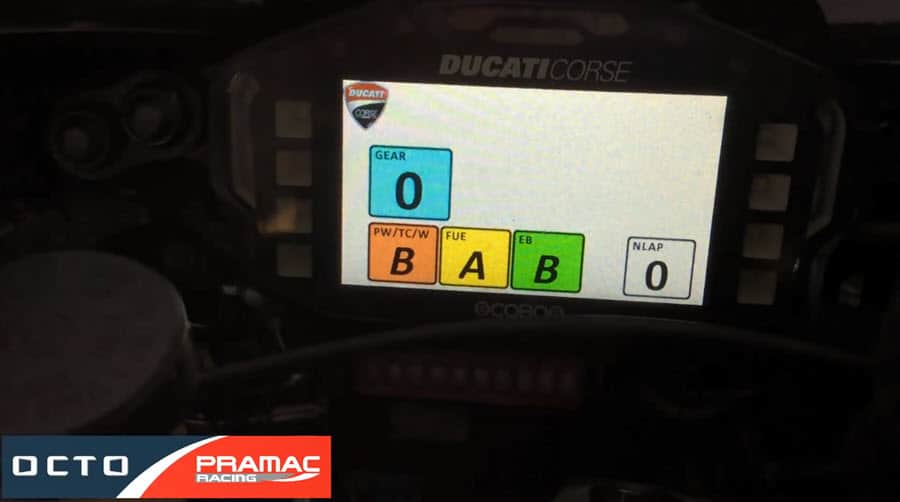
Image courtesy of Pramac Racing
How often will a rider make changes?
It depends on the race and conditions.
In a Sprint, riders may make very few changes because fuel saving is less of a factor.
Over a full Grand Prix distance, changes are more common as grip drops, the tyre behaviour changes, or the dashboard warns that fuel consumption is higher than target and a lower power map is needed.
For example, in Austria it is more likely they will use the Engine power and Fuel mapping in conjunction to conserve their fuel at this fuel guzzling track.
The tracks where cornering and tyre wear are the issue then heavier use of the engine power and engine braking programmes will be seen in the data reports.
There really is no limit as to how the rider may choose to utilise these functions.
How Teams Set It Up and Riders Switch It
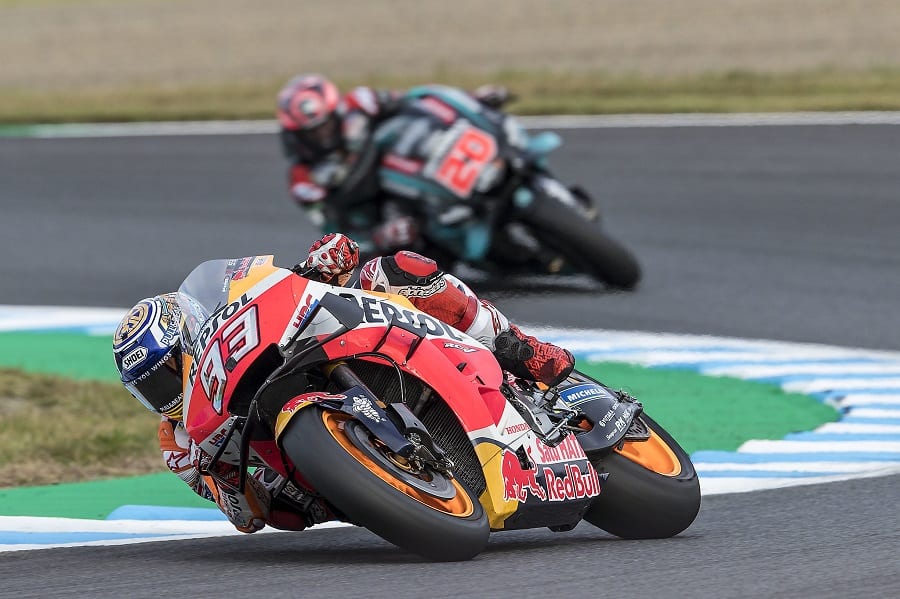
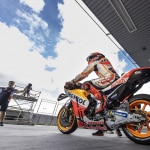
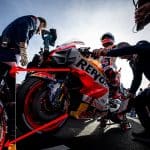
Marquez with Quartararo in pursuit at Motegi 2019. Image courtesy of Box Repsol on Flickr
Therefore, in this case Marquez was able to control his own engine mapping, making real time adjustments to ensure he could make it to the finish line and hold his first place before he ran out of fuel.
Many watching may have assumed the second and a half he lost on his lap time during the last 2 laps was his tyres starting to wear as we often forget they have such limited fuel available to them during a race.
Rarely do we see a rider run out of fuel but it does happen as fans witnessed when Johann Zarco ran out of fuel just shy of the chequered flag at the Misano GP in 2017.
In a heroic effort after 28 laps in the rain he pushed his Tech 3 across the line determined to finish.
So there you have it, a quick guide to the available mapping programme controls a MotoGP rider has at their fingertips and how getting it right can make all the difference some days.