Updated 23 February 2026 to reflect changes for the 2026 season and also the latest research data re attendances etc.
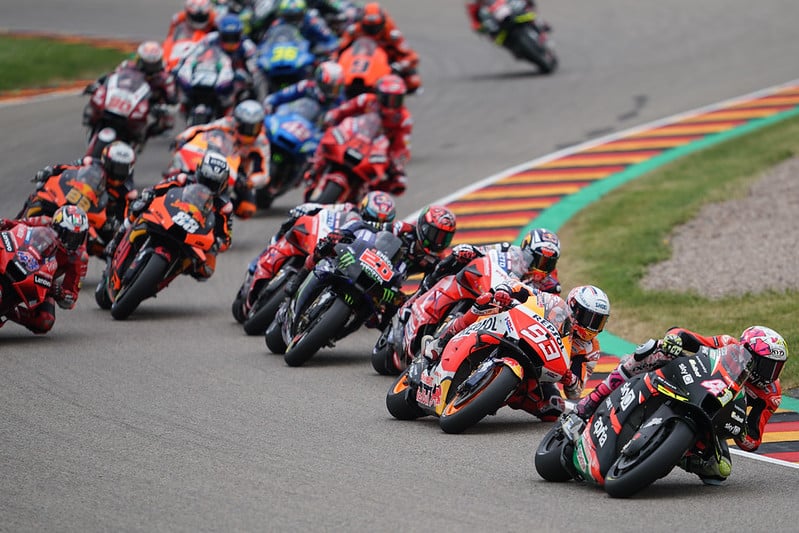
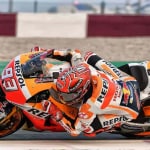
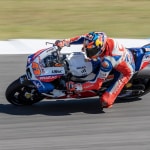
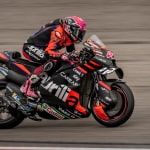
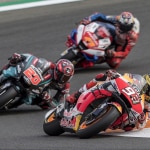
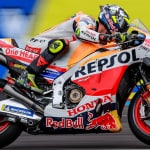
Image courtesy of Box Repsol on Flickr
From the 2023 season onwards MotoGP race weekends have included Sprint Races on the Saturday afternoon much like F1 and WSBK.
The shakeup came on the heels of a drop in interest and sponsorship for MotoGP.
Dorna and the powers that run MotoGP are doing all they can to turn this around.
It was unclear the exact reason for the lack of interest but it could be assumed the loss of many big names to retirement, the pandemic, very few countries offering it free to air on TV anymore and in many cases the difficulty in travelling to the tracks in person to attend a race may have all played a part.
To rectify this, Dorna asked fans to give them feedback about what was missing.
And one thing was very clear: there needed to be more action across the weekend.
While being at a race is very exciting and there is lots to see there are large portions of the time where there is no racing and well it becomes a little boring at times.
If you have gone to the effort and expense to attend MotoGP fans want more track action, it's pretty simple really.
From the results of the poll, the idea of MotoGP Sprint Races became Dorna’s latest plan to lift attendance and viewers at home.
So, let’s have a look at what they are and how they have changed, hopefully for the better, the sport we love so much.
What are MotoGP Sprint Races?
These are half-distance races held on the Saturday afternoon of each race weekend.
The top 9 score points: 12–9–7–6–5–4–3–2–1
Sunday remains 25 points for the win, so a rider can score 37 max per GP weekend.
However, the results of this race have no bearing on the starting grid or outcome of Sunday’s main race.
This, of course, meant changes to the format of race weekends.
It was one of the biggest changes to shake up MotoGP since the 2002 switch from 2 stroke 500cc to 4 stroke 990cc.
This change has seen riders, teams and track staff pushed to new limits and has been an exciting change from Dorna.
How did the race weekend change?
The old FP1 and FP2 held on Fridays have sort of remained.
However, the old FP2 became "Practice" and is the sole timed session (of 60 minutes duration) which determines who goes to Q1 and Q2.
A "new" FP2 session of 30 minutes is held on the Saturday and does not count towards qualifying, essentially replacing FP4.
The 20-minute warm up on Sunday became a 10 minute warm up session .
Qualifying itself did not change but the results are used to determine grids for both the Sprint Race and the main race on Sunday.
Adding the Sprint didn’t add extra track time, but tyre allocation rules do evolve season to season — for 2026 Michelin adjusted the front-tyre allocation.
Since MotoGP is following on from F1 and WSBK it is worth noting there is a difference here between the formats chosen by MotoGP.
In modern F1 Sprint weekends, the Sprint is designed to be standalone and does not set the Grand Prix grid (with only edge-case exceptions like penalties).
In the World Superbike Championship (WSBK), the "Superpole Race" (the 10-lap sprint) determines the starting grid for Race 2, which occurs later on Sunday.
They also changed the Schedule
MotoGP became the last class on the track each day to allow for track invasion and more fan interaction.
Any Technical Changes for the Sprint Races?
The maximum fuel tank capacity for Sprint Races is 12 litres, as opposed to the main race which is a maximum of 22 Litres.
Teams are allowed to use a purpose-built fuel tank with this capacity or an alternative method of reducing capacity in the normal tank.
Other fuel tank regulations will be in line with those for full length races, e.g., ambient temperature of fuel, and so on.
How do points work for Sprint Races in MotoGP?
Much like the race being half the main race length, the points awarded for the Sprint races are half the points available at the main race. They are also awarded to less riders on the grid.
For example, in the main race the top 15 riders are awarded the following points: 25, 20, 16, 13, 11, 10, 9, 8, 7, 6, 5, 4, 3, 2, 1. With only the top 15 being awarded points at all.
In the Sprint race only the top 9 receive points at all, awarded as follows: First position is awarded 12 points, the remaining 8 positions awarded 9, 7,6,5,4,3,2,1.
This is important to remember because now championship points are up for grabs on Saturday as well as Sunday. Championship races have not been held on Saturdays since the Dutch GP in Assen stopped being held on the Saturday in from 2016 onwards.
How do the riders feel about the extra races?
With Dorna’s statement that track time won’t change there was also no pay change for teams or riders.
However, no track time change does not mean nothing changed. Pressure on them to win changed, there is additional pressure now on a Saturday not only to qualify but to win points towards the championship.
Not to mention the additional pressure on teams to have all maintenance and so on complete with two races in mind now not one.
This can be offset by the fact it would increase interest worldwide and therefore revenue and in time pay rises for all involved.
Still, it was initially met with mixed feelings from the paddock, most notably Fabio Quartararo has expressed his concerns and displeasure with the idea, along with Aleix Espargaro.
Both pointed out the difficulties faced by riders physically and that at some tracks this is a very tough ask for them to race twice in one weekend.
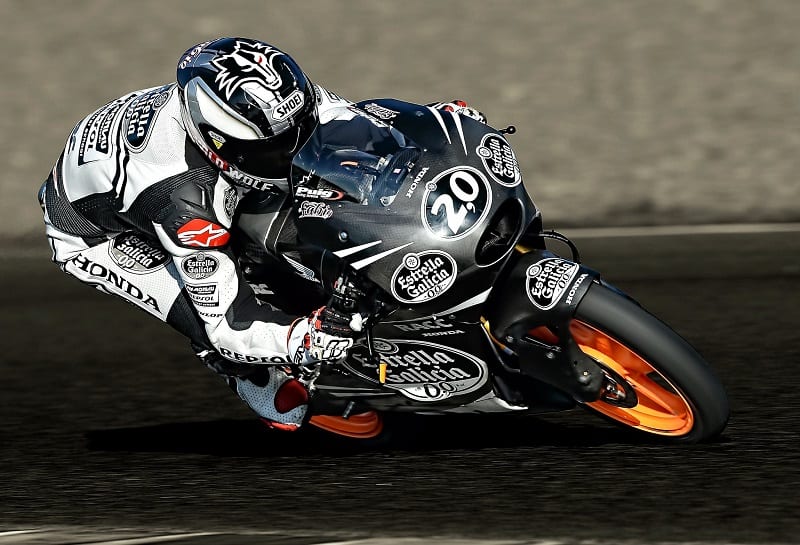
Fabio Quartararo image courtesy of "driver Photographer" on Flickr
Quartararo went as far as to say in an interview:
“I think it's totally stupid. I'm not the one who makes decisions about race formats, but I think we're entering a totally stupid format. If we do it from time to time, like in Formula 1, I think it can be interesting, but every Saturday... honestly, there are circuits where you are physically exhausted, like Assen, Mugello. When we finish the race, we are exhausted. Honestly, I don't think it's right to do this without asking the riders' opinions. Or at least I wasn't asked."
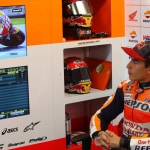
However, then six-time world champion (now seven) Marc Marquez enthusiastically welcomed the idea stating it will make the series “more spectacular”.
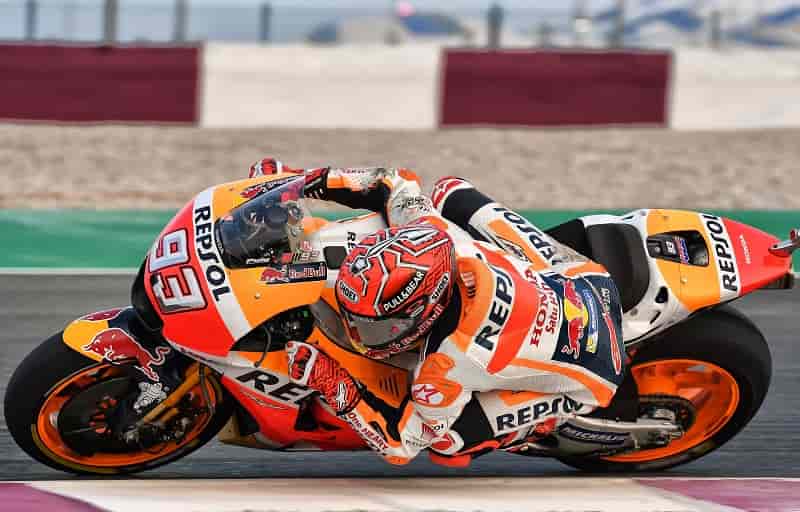
Going on to say in an interview for Motorsport.com
“I think it's a wise decision, especially because it's in favour of the show,” Marquez stated. As a rider I like Sundays, because that's when the races take place. Sprint races will make MotoGP more spectacular and give a different point of view of the weekend. There will be less time for testing, and that will make the work of the factories even more important.”
Jack Miller and Joan Mir also welcomed the idea of Sprint races to help lift the sport to a new and exciting level.
It is interesting to note that according to Dorna Sports, the FIM and the International Race Teams Association, the proposal was unanimously backed by all teams.
Personally, I thought it was a really good thing.
For a while things had seemed a little stagnant with MotoGP.
Perhaps it was time for teams to be pushed, for riders to be pushed and a new generation of MotoGP riders created.
Marquez pointed out with less time to work on the bike, test and make changes it pushed the teams again to be better and faster on race weekend.
It has been a long time since MotoGP had been given a shake up like this one and I cannot argue Dorna needed to do something to reinvigorate the sport and bring it to even greater heights.
Has it been a success?
The answer appears to be a resounding yes. By the end of 2025: