
(Updated 18 February 2026 to reflect the changes for the 2026 season)
What was once thought to be impossible happened in 2024.
Jorge Martin, a satellite team rider for the Prima Pramac team, won the 2024 MotoGP Championship.
An incredible feat for a non-factory independent rider.
Francesco Bagnaia, a factory Ducati rider, was second and another satellite rider (Marc Marquez from the Gresini team) was third.
If you’re new to MotoGP, it helps to understand the difference between factory and satellite teams so keep reading!
Farewells in 2025
Riders
We bade farewell to several big names at the end of 2025.
Miguel Oliveira made way for three-time Superbike champion Toprak Razgatlıoğlu for the 2026 season and Oliveira now races in the 2026 WorldSBK Championship.
Somkiat Chantra also moved to WorldSBK for 2026 from MotoGP being replaced by the 2025 Moto2 champion Diogo Moreira.
We wish them all the best in their new ventures.
Teams
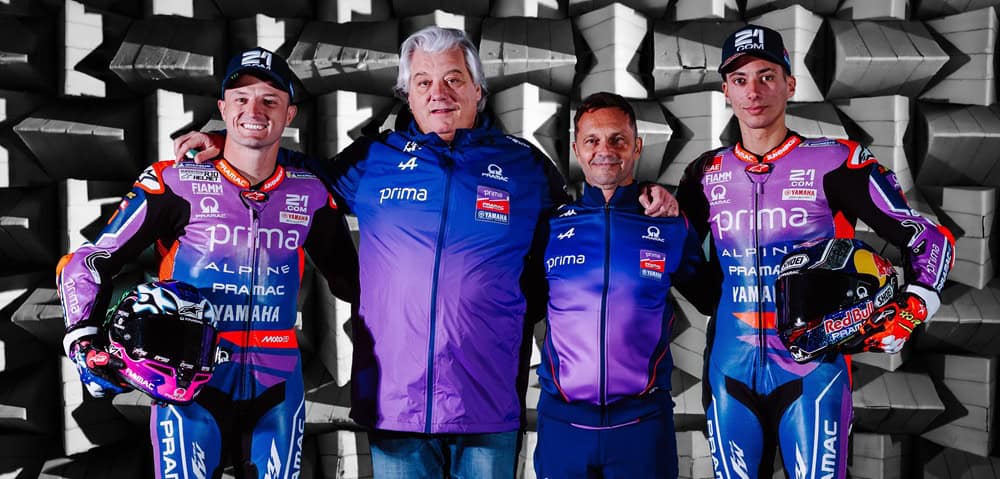
Pramac’s switch from Ducati to Yamaha has now moved into its second season, with the Italian squad continuing as Yamaha’s satellite team in 2026, fielding Jack Miller alongside MotoGP rookie Toprak Razgatlıoğlu.
In recent years Ducati’s dominance has been reflected not just in results, but in the strength of its customer-bike presence — although with Pramac no longer a Ducati partner, Ducati now has three teams on the 2026 grid: Ducati Lenovo, VR46 and Gresini.
With Pramac providing Yamaha extra bikes and extra data, the hope is that the expanded programme can help accelerate Yamaha’s development and close the gap at the front.
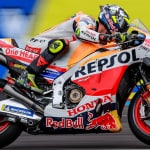
Finally, the iconic Repsol Honda colours disappeared from the factory entry from 2025 onwards, with the works team continuing under the Honda HRC Castrol banner in 2026.
What’s new in 2026?
Heading into 2026, continuity is the story, with most line-ups unchanged from 2025.
At Ducati Lenovo, Francesco Bagnaia continues alongside Marc Marquez, who arrives into 2026 as the reigning 2025 MotoGP World Champion.
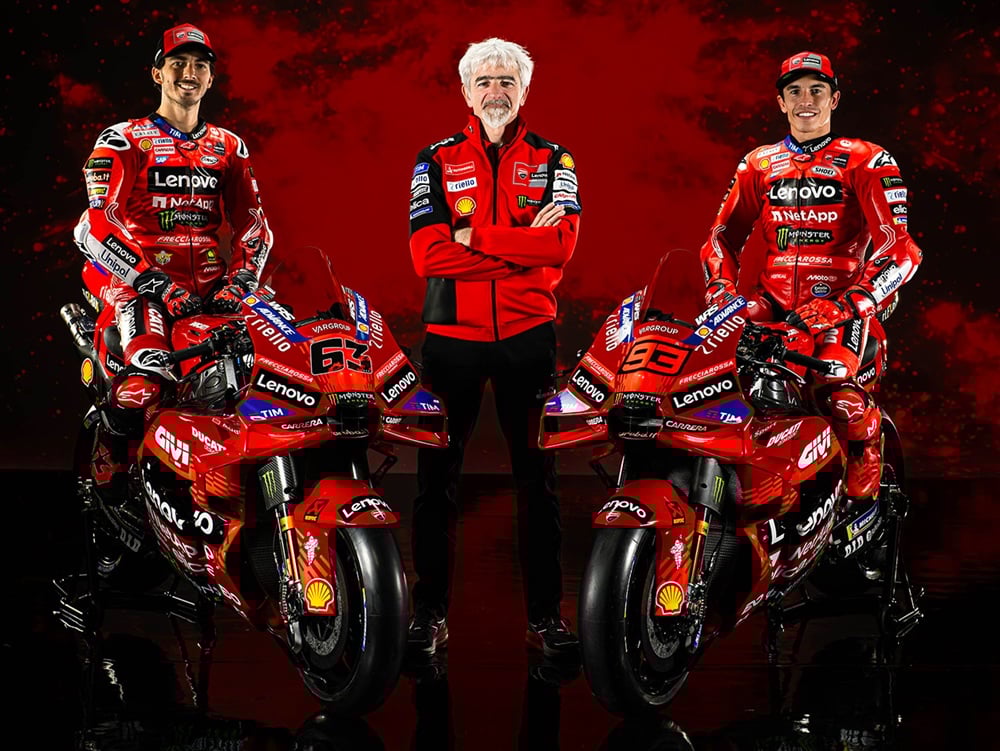
Factory Yamaha continue with Fabio Quartararo and Alex Rins, while Joan Mir and Luca Marini remain at Honda HRC Castrol.
Meanwhile, Jorge Martin continues his Aprilia chapter alongside Marco Bezzecchi, and KTM keep Brad Binder with Pedro Acosta, with Tech3 again running Maverick Viñales and Enea Bastianini.
The main changes for 2026 come at Pramac Yamaha, where Toprak Razgatlıoğlu joins Jack Miller.
Changes afoot also at LCR Honda, where Diogo Moreira lines up alongside Johann Zarco.
Keep reading to know all about the difference between factory and satellite teams below and brush up on your knowledge for the 2026 season.
The gap between factory and independent teams has narrowed dramatically.
Looking back, for years it was almost like watching two races.
There didn’t seem to be any change in sight until Dorna decided this no longer provided fans with the best possible racing experience.
Closing the gap between the factory and satellite teams has taken place over almost 10 years, starting in 2016, and has certainly proven very successful.
A factory team such as Honda HRC Castrol (formerly Repsol Honda) and Lenovo Ducati are directly managed and funded by the factory who manufacture the bike.
In theory this means the factory riders have the latest bike with the latest technology and access to the best engineers, mechanics and so on.
A satellite team has the bike on lease or purchased from a factory e.g. LCR Honda or VR46 Ducati and so on.
Independents aren’t run by the manufacturer, but support levels vary widely—from basic customer packages to near-factory backing.
They will also in theory have technology from at least the year before, as well as an older version of the factory teams’ bike.
However, it is not always black and white.
It really depends on the contract each independent (satellite) team has with the factory they are purchasing or leasing the bike from.
And more than ever we see Satellite teams with the same bike as their factory rivals.
In 2024, Prima Pramac Racing Ducati ran Ducati Desmosedici GP24s on equal machinery to the factory Ducati squad, showing how close “satellite” support can get to factory level.
In 2026 they continue as Yamaha’s satellite partner (often described as a second factory team within Yamaha’s programme), running Yamaha machinery aligned with the factory effort.
On the Ducati side, the “factory bike at a satellite” isn’t exclusive to one team in 2026: Ducati has expanded its latest-spec GP26 allocation, with one GP26 at VR46 (for Di Giannantonio) and one at Gresini (for Álex Márquez), while other bikes on the grid may remain on year-older specifications depending on agreements.
Ultimately, it depends on the contractual arrangements each independent team makes with its manufacturer — including funding, technical staff, and the exact spec of machinery.
The general rule remains: factory teams build and run the programme directly, while satellite/independent teams race manufacturer bikes under varying levels of factory support.
What is the unified software and how has it closed the gap between teams?
Before 2016 satellite teams were at a disadvantage due to software available.
Not only did factory teams have advanced technology they had the technicians to utilise it better.
There were also questions around how far certain software could be manipulated to gain an even bigger advantage in terms of bike performance on race day.
So, in 2016 Dorna began a unification process of software across the field that has proven a huge success in achieving a more exciting race each round.

Then Satellite team rider Fabio Quartararo pursuing Factory Team rider Marc Marquez at the 2019 Valencian MotoGP Image courtesy of Box Repsol on Flickr
Here is a quick look at exactly what this process entailed.
Closing the software loophole
MotoGP bikes are fitted with what is called an Electronic Control Unit (ECU) and an Inertial Measurement Unit (IMU).
What do these units do?
The IMU system tells the bike what it is doing.
It collects data and measurements sending the results to the ECU which uses this data to operate functions like braking control from the riders’ input, acceleration, traction and launch control.
In 2016 we saw the software for the ECU be unified across the field. Further to this, as of 2019 unified software for the IMU and the Controller Area Network (CAN) connections leading to the ECU were also provided by Dorna.
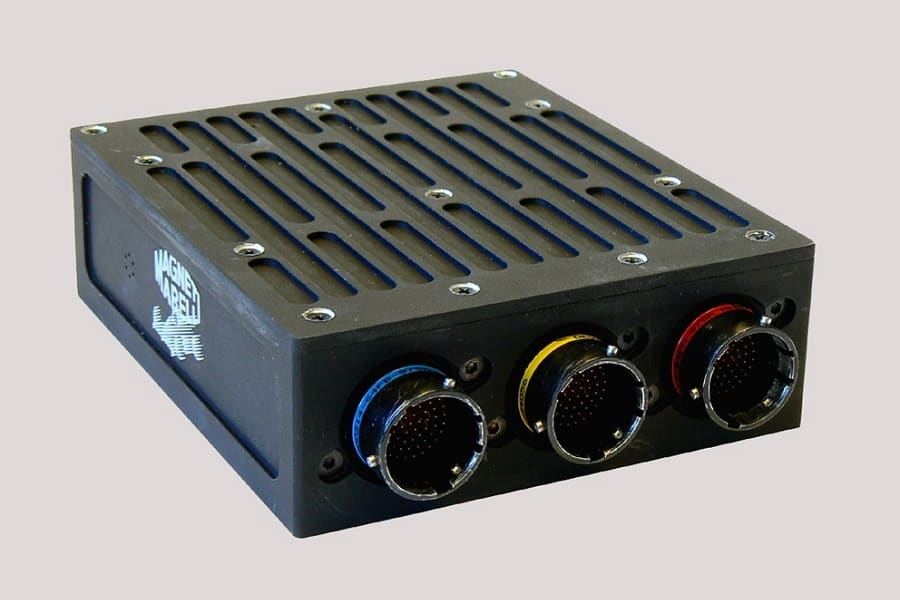
MotoGP Electronic Control Unit (ECU)
Providing unified software for these systems eliminates the ability to manipulate this data to create the effect of increased traction control or braking advantages.
Dorna decided it was easier to unify and supply the software that manages these systems than to try to police the manipulation of them, which is a direct breach of the rules, but almost impossible to monitor.
So, who are the 2026 Satellite Teams:
And the 2026 Factory Teams:
Big names and big talent
Some may think because a team is a satellite team, it will have less talented riders.
The evidence is before you that that is not the case as we saw the first Satellite team rider take the Premier class crown ahead of factory Ducati.
Also, many of the big names taking podiums, pole position and giving the front of the pack a good run for their money, are from satellite teams.
In 2024 we saw Marc Marquez, one of the most iconic riders in Premier class racing, switch to a satellite team after leaving the factory Honda team.
The move paid off proving he could handle the Ducati and for 2025 we see Marc Marquez back on a factory bike where he became world champion.
Following the Championship win by Jorge Martin for Pramac in 2024 the future of satellite teams seems set to keep soaring.
Dorna promised unification would bring better racing and they have delivered.
They have since backed this up with a change to the concession point system to bring more parity to teams and therefore the racing.
Of course, this raises the always present argument that too much interference and unification through rules or gadgets will result in parade races where no one is really racing they just get in position and ride the whole race.
So far that has not been the case.
There are always some races where very little happens and a parade race occurs, but it is highly unlikely this will become the norm.
In fact, many fans feel races have become closer and podium contention from the satellite teams is much more prominent than we saw before software unification was introduced in 2016 and we are loving it!
Now that independent teams have the machines to match their talented riders it is providing fans with more excitement across the race weekends.



Why does Brad Binder score as an independent team rider?
Excellent question! I was wondering the same thing and in researching the answer, learned some new things. First of all, it appears that “Independent Riders” and “Independent Teams” do not equal “non-Factory”. It looks like MotoGP includes the “concession Factory Teams” (Asprilla and KTM) in with the Independent Standings. Hence, Brad (even though he is a KTM factory rider) is listed with the independents. NOTE: “non-concession” factory teams (Yamaha, Honda, Ducati, and Suzuki) have stricter limits on number of engines available, etc
Hi. So why isnt Pol on the list?
I am sorry Andrew but we don't understand your comment? Brad rides for the Red Bull KTM factory team.
Why did HRC draft in Bradl instead of promoting Nakagami (or Cal)? Surely they have the ability to demand LCR lend them their rider? Honda are suffering big time without Marc and they are losing all championships. Taka or Cal on a factory bike should be able to deliver wins. Madness
You raise some interesting questions which would be worth exploring so thanks for that 🙂