
Updated 22 February 2026: corrected crash totals, clarified fatality references, updated 2026 Safety Car info, and refreshed equipment details.
Anyone in the motor racing world will tell you that no matter how many great minds work together nothing is ever 100% safe.
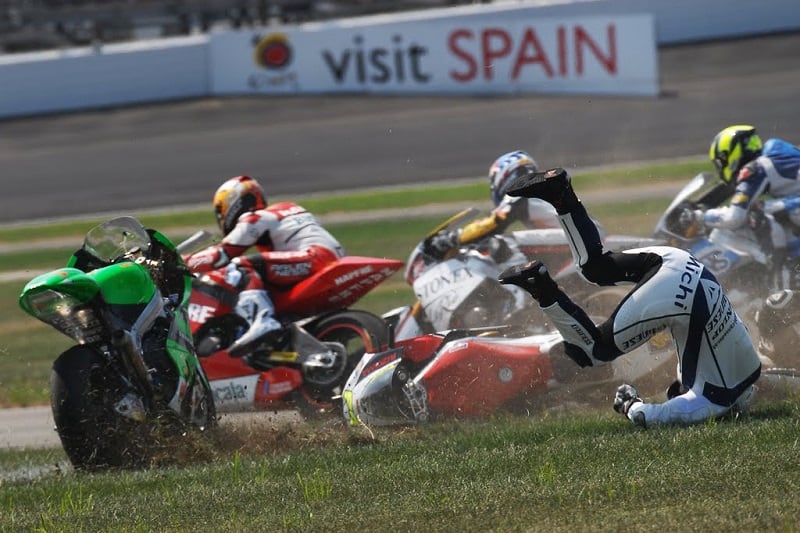
motoracereports [CC BY 3.0], via Wikimedia Commons
It’s just not possible.
However, we have come a long way over the decades in terms of rider and driver safety so now, while we are treated to many spills and crashes, we rarely see the death of rider or driver (thankfully).
As pointed out by top MotoGP rider Andrea Dovizioso:
‘the bikes and equipment get better with technology but the human body remains the same’.
In the 1970s, Grand Prix motorcycle racing saw a tragic number of fatalities – 24 riders across that decade.
Today, deaths in the MotoGP World Championship are far rarer.
In the last decade (2016–2025), the World Championship fatalities were Luis Salom (Moto2, 2016) and Jason Dupasquier (Moto3, 2021).
Jason Dupasquier was killed in May 2021 after crashing during qualifying at the Italian Grand Prix. He was airlifted to hospital but sadly the 19 year old passed away.
The last premier-class (MotoGP) fatality remains Marco Simoncelli in 2011.
The same downward trend exists in Formula 1: the 1970s saw 12 driver fatalities, while the most recent F1 driver death resulting from a Grand Prix weekend accident was Jules Bianchi (crash in 2014; died in 2015).
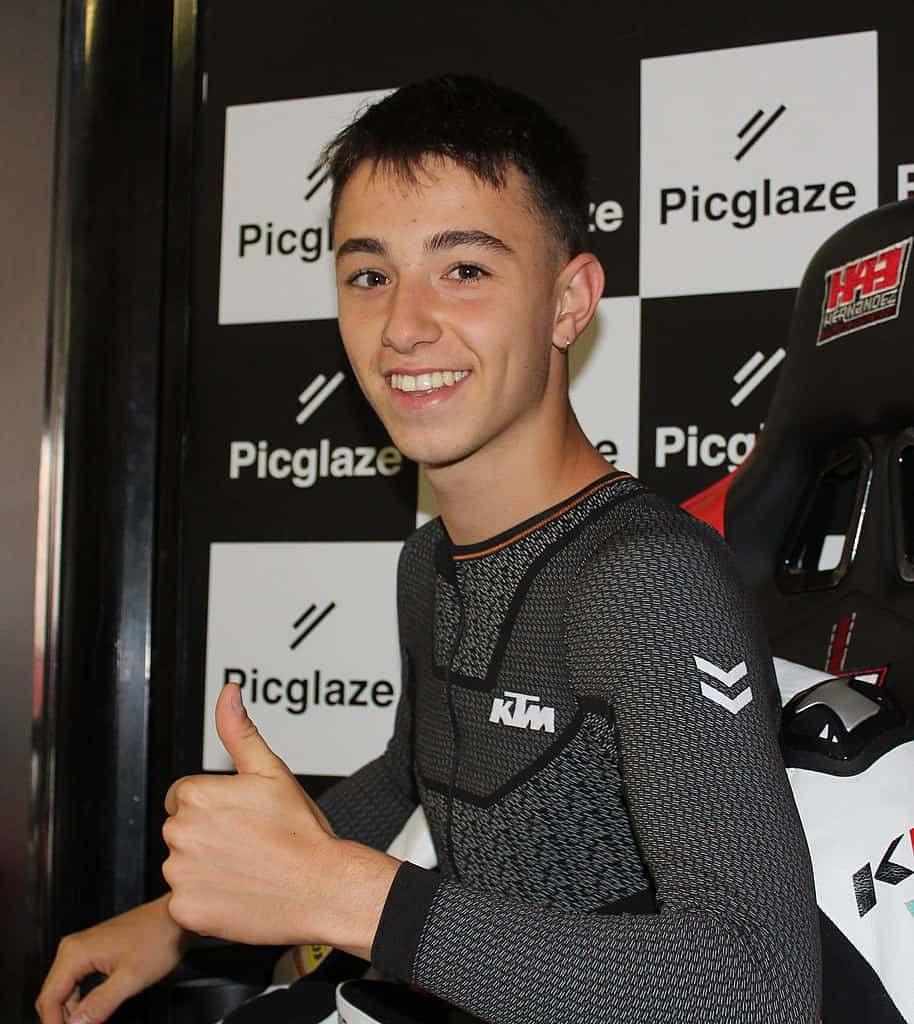
Jason Dupasquier Sandrasaez, CC BY-SA 4.0, via Wikimedia Commons
His death sparked many riders to call for more to be done about the safety of Junior riders and perhaps is the reason behind the regulation changes regarding minimum age. (See updated regulations for 2022 below)
How do FIM, Dorna, F1 management and the like maintain safety in the organised chaos of racing to keep tragedy at bay?
Nothing in motorsport is ever 100% safe — but the difference today is the sheer number of layers designed to stop an accident becoming a tragedy.
In F1, the car itself is a major part of the safety system: the survival cell/monocoque, the halo (introduced in 2018), advanced crash structures, strict fire protection, and the driver’s harness + Head and Neck Support (HANS) all work together to manage the forces in a crash.
In MotoGP there are different factors to consider. Since the riders don’t have the luxury of a vehicle surrounding them during a crash, it is their body on the line literally – here the biggest risk to the body is being flung into the ground, run over or struck as was the case with Marco Simoncelli at Sepang in 2011.
As well as Simoncelli, Shoya Tomizawa (2010 Moto 2) and Luis Salom (2016 Moto 2) both suffered fatal injuries due to the impact from a bike. In Luis Salom's case when he released his bike it sadly landed on him following a crash during free practice.
Tomizawa was struck by Scott Redding and Alex de Angelis in an incident during the San Marino Moto2 Race that would almost replay exactly during the following season in Sepang. It seems the issue of being hit by a fellow rider or struck by an out of control machine is now the major risk riders face.
Flying debris is a concern for both sports. The best that can be offered to a rider is protective safety gear rather than the soft fire proof variety seen in F1.
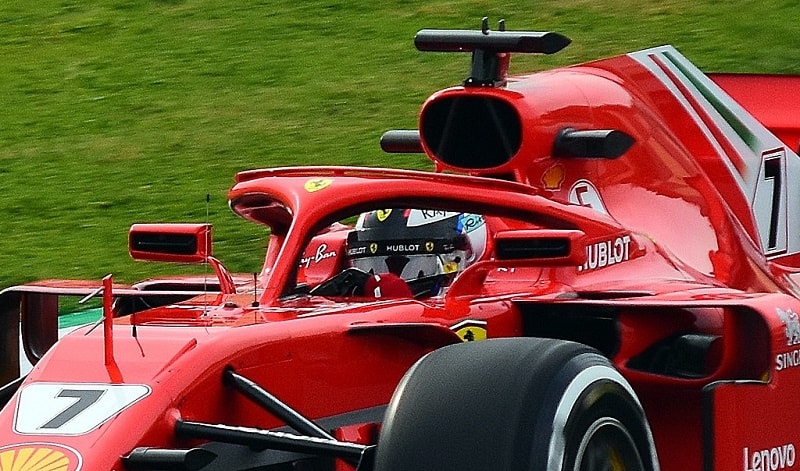
Photo by Artes Max from SpainCropped by Danyele [CC BY-SA 2.0], via Wikimedia Commons
In MotoGP, the bike itself can have no additional features to assist the rider in the event of an accident.
Instead, only their leathers can provide any safety features at all. A set of leathers is fitted with metal and plastic sliders (which do scrape the ground on cornering) a protective hump and an airbag, which was made compulsory in 2019 for all riders.
Following the notable incident in 2021 at the Barcelona GP when Quartararo was surprisingly allowed to finish the race with his leathers unzipped there has been an update to the rules around the zipper.
A new system of positive fastening has been agreed with the manufacturers. Use of leathers with this closing system is now mandatory.
(Interesting fact it turns out MotoGP leathers are typically kangaroo or premium cowhide (often a mix/varies by brand)
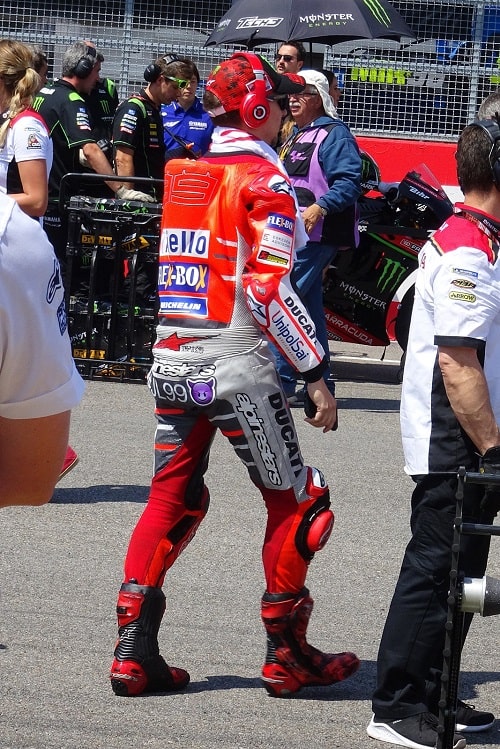
Sachsenring MotoGP 2018. Courtesy of Neuweiser on Flickr
The airbag consists of a vest worn beneath the riders suit. It is designed to protect their ribs, torso and collarbone in the event of a crash. These are fitted with accelerometers and gyroscopes in order to communicate with the electronics approximately 1000 times a second.
This amazing technology means no failure to deploy when needed, no false deployment if you drop your suit etc and no deploying under a certain speed (approx 25km/h).
F1 has increased the amount of electronic advancements (I call them interference personally but each to their own) to assist with driver safety.
This is something MotoGP have steered clear of, preferring to leave the handling of the vehicle to the person operating it.
If safety features alone were responsible, such as technological features on the vehicle, you might expect to see very many more fatalities in MotoGP since there is not the overbearing electronic features and because the rider is exposed to other bikes in a crash but we just don’t.
It's odd right? As an example there were 1,077 crashes in MotoGP during the 2018 season. Less safety features, yet the MotoGP fatality rate is only very slightly higher than F1 (odd but definitely a very good thing).
Perhaps it is a combination of factors that keeps excitement high? Crashing occurs but fatalities are rare.
In addition to the safety gear and technology are the numerous medical staff and facilities placed track side to assist with everything from daily health issues of the entire travelling paddock through to minor accident injuries.
Where a serious injury occurs the injured party will be airlifted to the closest hospital. It is a condition of hosting such events that airlifting or road transport to a hospital be possible in a reasonably fast time frame.
Even then it is no guarantee other factors won’t impede the efforts of medical staff.
This was one problem following Jules Bianchi's death in F1 in 2015. Due to the onset of a Typhoon airlifting was impossible and travelling by road was hampered to the point it took over 30 minutes to reach the hospital.
The medical staff at a MotoGP event include several doctors, a nurse and 2 traumatologists.
These medical staff work in conjunction with the Safety Car, the trackside marshals and other staff involved in race direction.
While many of us see the safety car whizzing around the track at the start of each race or if there is an incident, few are aware it is a fully stocked medical vehicle usually with a nurse or doctor on board.
Medical response is one of the biggest reasons the outcomes are so much better today.
Both championships deploy specialist medical staff trackside, and rapid-response vehicles that can reach an incident within seconds.
In MotoGP, the BMW “Omega” cars form part of that system, with the lead vehicle (“Omega 1”) playing a key role in coordinating fast medical response and controlling the pace when required. (MotoGP’s current “Omega 1” safety car is the BMW XM Label Red, introduced as the championship’s first electrified safety car.)
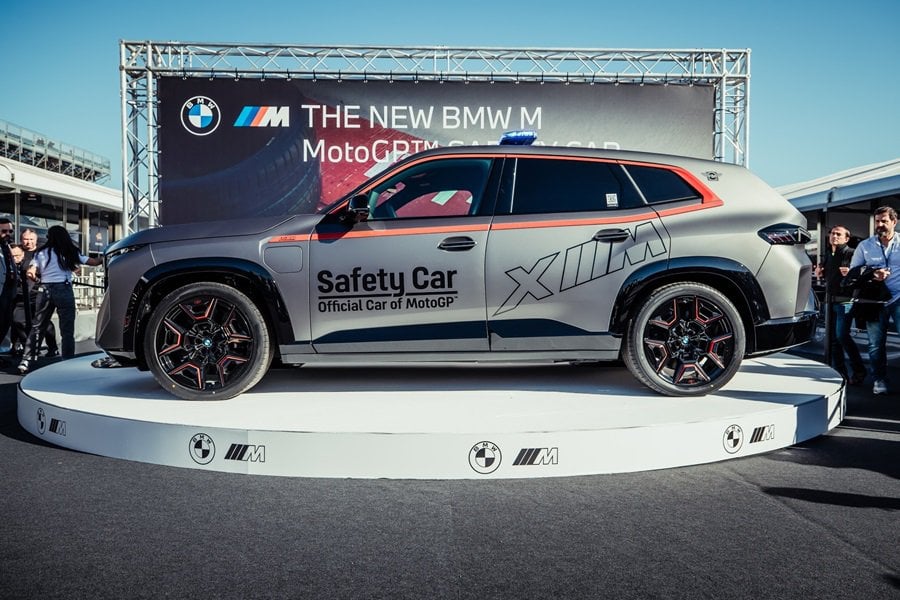
What is the role of the safety car? It is important to note there are 2 vehicles called Omega 1 and Omega 2. The man in charge is Carlos Ezpeleta who drives Omega 1 on Race day and coordinates the medical team among other roles.
These cars are an integral part of the safety procedures when things do go wrong as they provide fast medical assistance including defibrillators, while Omega 1 keeps the other riders at the pace required until it is deemed safe to return to normal racing.
In Formula 1, Mercedes-AMG will provide the official Safety Car and Medical Car at every Grand Prix in 2026 (ending the shared supplier arrangement used in recent seasons).
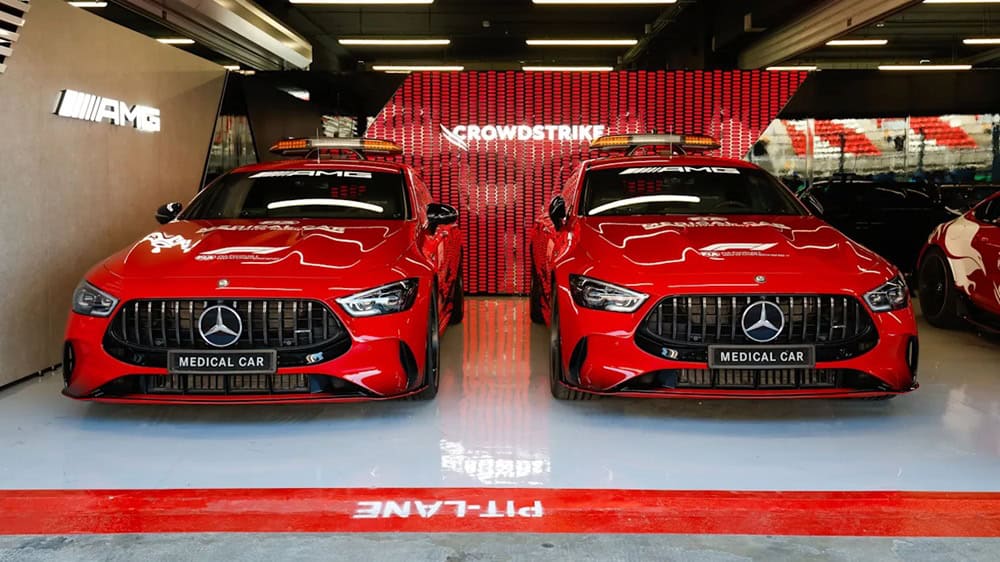
In both F1 and MotoGP the trackside marshals will radio race direction any incident or issue they see and the necessary staff and vehicles are deployed.
The only real notable difference between the two is F1 requires the use of cranes near the track to assist with removing vehicles from following serious incidents.
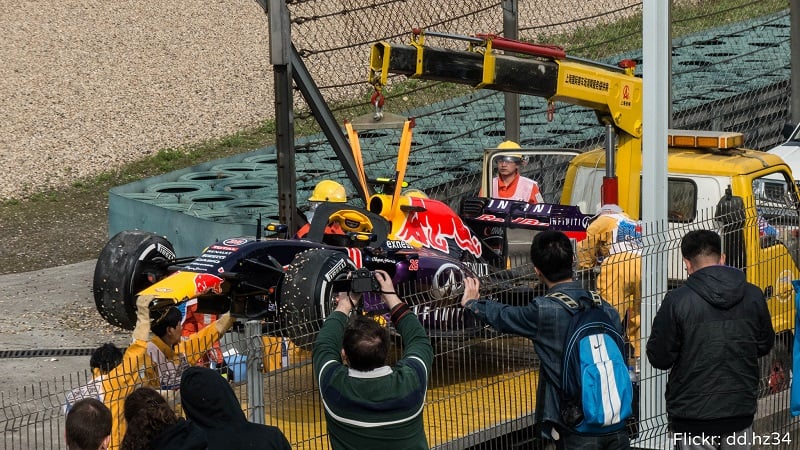
Image courtesy David Hernandez on Flickr
This in itself carries an additional area to consider in terms of safety.
Sometimes there is just nothing that could prevent the death of a rider or driver. Other times they walk away and we are left speechless that a human body can withstand such an impact even with safety equipment.
The last time a MotoGP rider died was in October 2011 when Marco Simoncelli sadly passed away following one of the most heart wrenching accidents in MotoGP history.
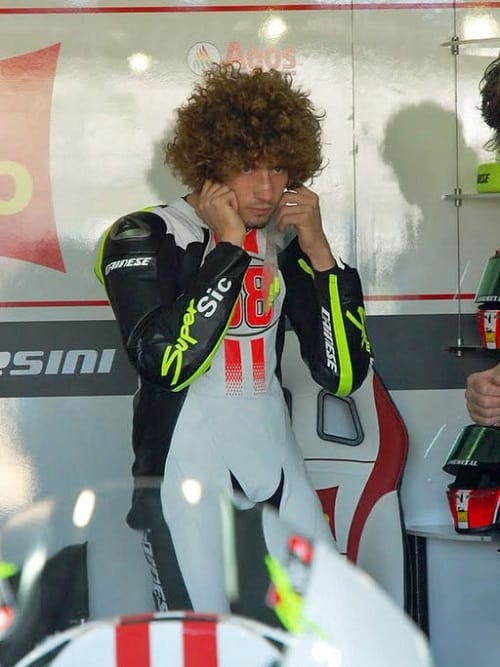
motoracereports [CC BY 3.0], via Wikimedia Commons
In a terrifying moment Simoncellis’ best friend and mentor, Valentino Rossi, and fellow rider Colin Edwards made horrific contact with Simoncelli as he slid across the track. Rossi reportedly connecting with Simoncellis head and neck, the force of his Ducati ripping Simoncelli's helmet off, Edwards connected with Simoncelli also crashing himself and suffering a shoulder injury.
The investigation that followed brought about the changes/observations detailed below:
Helmet Retention Systems: Investigations into why the helmet came off prompted closer scrutiny of helmet straps and attachment points. This accelerated the development of, or wider adoption of, more secure, FIM-certified helmet tether systems designed to keep the helmet attached during extreme impact.
Airbag Technology: Although not directly fixing the helmet issue, the incident accelerated the push for full-leather airbag systems, which became mandatory for all riders in 2019 to better protect the neck and chest in high-speed crashes.
Medical Response Reviews: The incident led to a comprehensive review of track medical procedures, including faster response times, which are now typically under 30 seconds.
The "Unavoidable" Nature: Despite the safety changes, officials like Franco Uncini noted that in such intense impacts, the energy involved makes it difficult for any helmet to remain on, and in some cases, a strap that breaks is better than severe neck injury.
F1 has more recently been saddened by the death of one of its elite with driver Jules Bianchi losing his life following a crash on lap 43 of the 2014 Japanese GP in poor weather and low light.
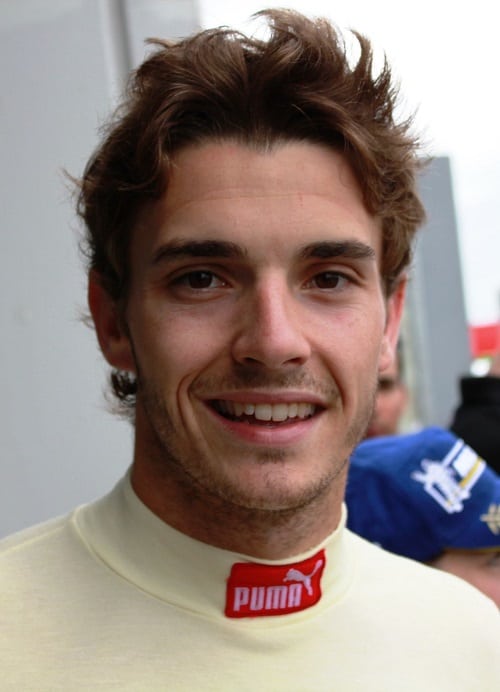
Henry Mineur [CC BY-SA 3.0], via Wikimedia Commons
If you have watched the footage you are not alone in thinking it is like an episode of 60 minutes to disaster – or in Bianchi's case 60 seconds to disaster and it seemed the powers that control F1 agreed and several safety changes were made following this accident.
As one watches the final moments of his life we can clearly see if the crane did not begin its backward trip when it did, Bianchi could have gone clean through to the safety barrier and perhaps survived.
The Bianchi family agree, filing lawsuits against the F1 management of the day and motor racing bodies involved in F1 for the death of their son.
Some changes were made by F1 in the hopes of preventing a similar incident such as ensuring start times always leave plenty of time before dusk, the placement of recovery cranes to limit such impacts again and changes to the way a crash is dealt with in terms of the safety car and procedures for other drivers. (NOTE: Bianchi passed away in July of 2015 having been in a coma since the tragedy)
What can the circuits do to improve safety?
Circuits on the calendar also play a role in the safety of MotoGP and there are times work must be done to upgrade a track for safety reasons.
This is the case with Jerez and Mugello.
These are two of the most iconic tracks on the MotoGP circuit but were in need of some much-needed upgrades.
Jerez has had work to Turns 2 and 10.
Both corners having extra run off added to comply with the FIM regulations.
An extra 35 metres and 20 respectively.
To achieve this service roads have been shifted back and a change to the seating area for spectators has occurred.
Mugello saw the most upgrades completed of the two tracks with a huge 1500 square metres of asphalt added to areas around the track in total.
Additional runoff has been added along the main straight, also meaning a change to service roads.
They also needed to update several kerbs to meet FIM specifications.
All round these safety upgrades will ensure two of our favourite tracks stay on the calendar for a long time to come.
It is a very fine balance to ensure everything is not wrapped in cotton wool and so significantly reduce the excitement enjoyed by fans.
Danger and Risk are significant elements as to why we show up every race day to watch our heroes.
It’s an integral part of what the drivers and riders have to triumph over to win a championship.




_(cropped).jpg)
.jpg)


You say it's odd that motogp has about as many deaths and it puzzles you?? Its because the tracks are much safer now.
I agree the tracks are much safer but the sheer number of MotoGP crashes each season must surely mean the chance of a tragic accident would be considerably higher?