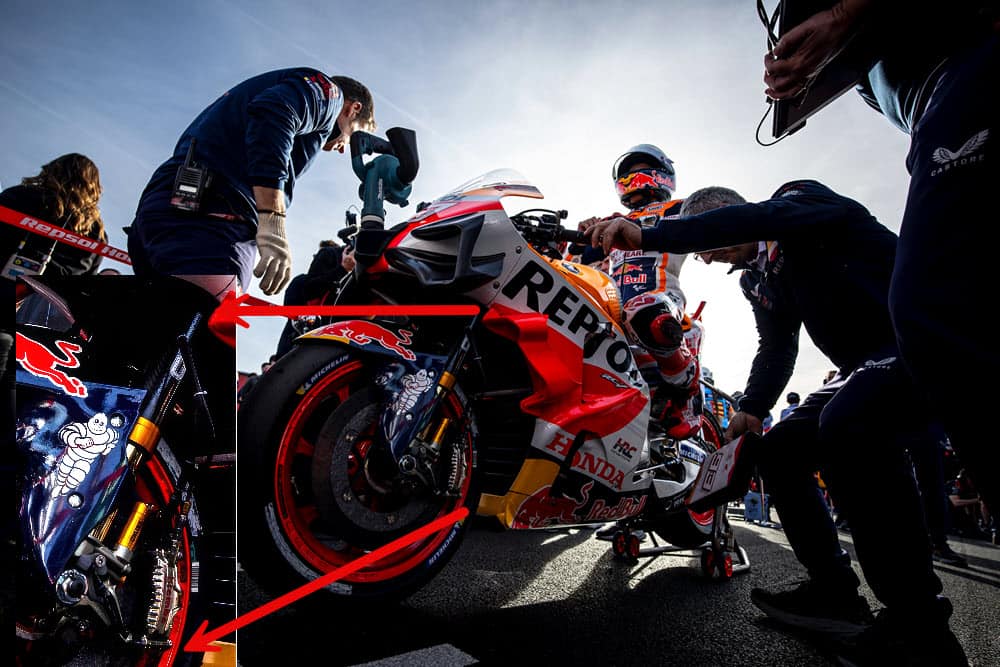
Image courtesy of Box Repsol on Flickr
Updated 4 February 2026
MotoGP suspension may seem straightforward at first.
However, a closer look reveals it to be extremely complex and requires precision mechanical finesse to ensure this area of the bike is working how the rider needs it to.
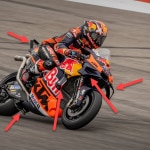
Alone, the front forks have over 300 components and impacts the geometry and handling of the bike among other things.
So much on the race weekend relies on these often-invisible parts and the technicians who manage it are among the best in the world.
So, let's have a look at how MotoGP suspension is set up and the considerations teams need to make when putting this area of the bike together.
Suspension Components
If you are totally new to motorsport (or even bikes in general) then a quick explanation of what parts go into the suspension system and how it is adjusted to achieve optimal performance of the bike, is important.
There are four terms that we hear mentioned a lot when talking about suspension:
Let’s have a look at what these are and what they do.
Springs
The springs can be found in the front forks and rear suspension and they are designed to carry the weight of the bike.
Springs are categorised by the force it takes to achieve its compression. In this instance the pressure is measured in Newtons/millimetre and for MotoGP bikes the usual range is 8 to 12 N/mm.
This will make sense as we go on, I promise.
With a stiffer spring, the suspension doesn’t sink as much when the rider brakes, which gives more support and stability.
But it can make the bike less comfortable over bumps when leaned over, reducing grip and increasing tyre wear.
This increased tyre wear is caused by the pressure of braking transferring weight onto the front tyre causing increased wear.
This is but one of the considerations technicians and riders must make in their selection of suspension set up.
If the rider selects softer springs, they will have better handling during cornering but risk bottoming out under hard braking, this is where the spring reaches full compression if the rider must slam on their brakes.
Having the front forks bottom out like this creates additional risk of crashing because it will drop the front of the bike too much and lift the rear tyre – this can cause the rider to high-side or crash due to losing control of the front.
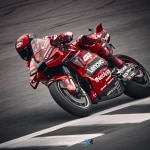
Unless of course you are Francesco Bagnaia who explained in a recent interview with Motorsport Magazine's Mat Oxley how he prefers to use a riding style that involves fully bottoming out the front forks.
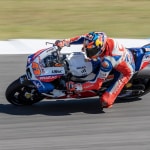
When Bagnaia hits the brakes and enters a corner he does so in a sliding fashion with the rear tyre kicked out, and his front fork fully bottomed out.
He explains this is because he likes to feel the tyre and not have the feel of the suspension getting in the way.
He will then control the compression of the forks with his brakes.
Riding in this way brings the advantage of faster cornering and Bagnaia is harder to overtake when entering a corner.
However, it does require careful timing when accelerating out of the corner otherwise the risk of losing the front tyre is increased because the forks are bottomed out.
This contributed to his crash in India 2023 while fighting Martin for second place.
As opposed to Bagnaia's style, Jorge Martin does not use a style which bottoms out the forks and rather employs a style that allows for faster exit speeds out of the corner to gain any possible advantage.
Preload
The term preload refers to the compression placed onto the spring when the assembly is at rest (the bike is not moving, and no one is on it).
This preload is performed to avoid the spring from reaching its full extension capability.
The more preload placed on the spring the harder it is to compress the front forks. This makes the suspension “stiffer”, and the suspension takes longer to sink down.
This process can also be used to adjust the height of the bike.
This is achieved by changing how far the shock absorber is covered.
However, in MotoGP they are limited to 130mm, so they don’t have a lot to play around with in that aspect.
Compression and Extension (rebound)
The terms compression and extension refer to what occurs when the suspension is in action.
So, when we go over a bump our suspension compresses, on a bike this occurs in the front forks.
When the suspension begins to return to its normal position this is called extension or rebound.
The technicians want to be able to control both aspects of this behaviour in the suspension and they do this by making some adjustments once the springs are selected and the correct preload has been applied.
Shock Absorbers
Time to consider the role of the shock absorber in this process and the adjustments made to control the compression and extension.
Inside the shock absorber is fluid and a series of valves.
By making very small adjustments, more or less fluid is able to pass through the valves.
Closing the valves and preventing the fluid's movement will slow the speed of the extension.
Opening them and allowing fluid to pass quicker will speed up the extension.
These adjustments are so small and precise they can control both the compression rate and the extension to operate exactly how they desire.
We must remember this happening on both the front and rear. The front is affected by the braking and the rear by acceleration.
The speed of this compression and extension for both shock absorbers must be so precise that it allows the control needed and for the rear tyre to maintain contact with the ground to allow for maximum grip.
It really is a very fine art to get this working right at the same time.
Add to that it can change for each track and be further impacted by current track or weather conditions and rider preferences, the technicians really do deserve a pat on the back for all their effort each race weekend.
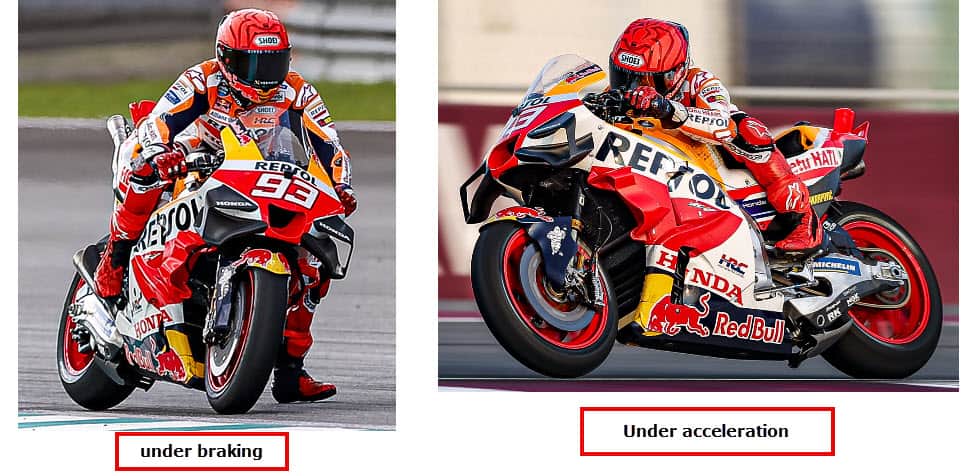
Images courtesy of Box Repsol on Flickr
How do they adjust the suspension?
Despite its complexity, technicians can set up and adjust the suspension in a matter of minutes.
At the front, each fork is essentially a tube they insert the springs into.
Each fork can have a different spring to give even greater precision to performance.
Once this is complete, they can use a spanner in the top of the fork turning to increase or decrease the preload setting.
These amazing technicians do this in under 2 minutes.
The rear takes a little longer and is not so straightforward.
In this case the team will usually have a pre-assembled and adjusted module ready to be fitted to the bike if changes are needed rather than adjust it already installed.
For a great visual on how this is done, I recommend Simon Crafer’s video on YouTube
Who Are The MotoGP Suspension Suppliers?
MotoGP suspension suppliers do not work like the tyre supplier.
MotoGP runs a single control tyre supplier: Michelin (through the end of 2026). From 2027, Pirelli will become the single supplier across MotoGP, Moto2 and Moto3.
Whereas MotoGP suspension has a couple of providers and teams are able to choose their own: Ohlins and WP Suspension.
Ohlins have been involved in MotoGP suspension for decades and can proudly claim 19 of the last 20 championships have been won with Ohlins equipped machines.
They are the leading choice on the MotoGP grid.
Ohlins was acquired by Brembo Brakes in January 2025.
Currently, only KTM factory and their Satellite teams do not use Ohlins Suspension. Instead opting for WP Suspension.
WP Suspension joined MotoGP in 2017 and they also feature on the Moto3 grid and other road racing events.
WP Suspension is a subsidiary of KTM which explains why all KTM teams across all racing use this brand of suspension.
How Much Do These Parts Cost?
So, how much does it cost for a MotoGP style suspension?
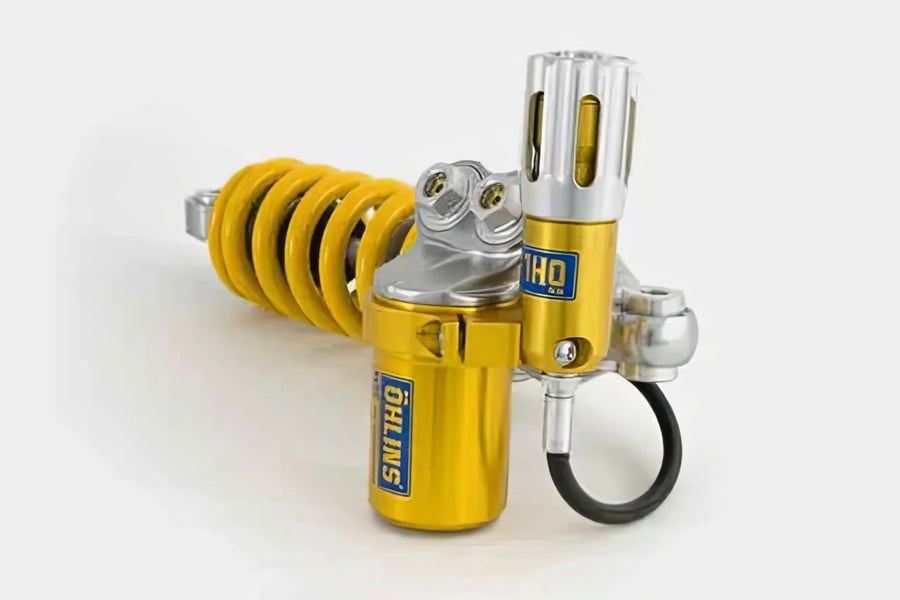
Replica race shocks inspired by MotoGP tech typically retail around £1,400–£1,500 in the UK (model-dependent).
It may make some of you happy to know they are also available for the public to purchase from several online suppliers of racing parts.
Suspension and Ride Height Devices
Both the front and the rear suspension has been the centre of much debate in recent years with the introduction and the subsequent banning of front ride-height devices that can be used during a lap were banned from 2023 (start/“holeshot” devices were still permitted).
Rear ride-height devices remain in use through 2026, but from 2027 the regulations will ban all ride-height and holeshot devices.
For more on this see our blog post on Ride Height Devices.
And there it is, MotoGP suspension explained. A complex system that requires technical precision to understand and set so the bike performs just right for the rider.
It really does show just how much the team and the technicians are a vital part of our favourite rider's success each season.