Updated 1st May 2026: the Grand Prix Commission has announced that wildcards will not be permitted from the 2027 season onwards.
Testing in MotoGP is an important yet often overlooked aspect of the season.
It can feel like a secret world – timed laps, new parts, and cryptic comments from riders who “found something” but very likely won't say what it is.
Here we aim to cover all the aspects of testing so you can better understand what is going on throughout the season.
When is MotoGP testing held?
MotoGP’s official testing programme spans from the day after the season finale through to in-season tests during the year.
1) Post-season test (first “new season” test)
Valencia (Circuit Ricardo Tormo) – Tuesday 18 November 2025
This test takes place immediately after the 2025 season finale weekend and is effectively the first official test of the 2026 season.
2) Sepang Shakedown
Sepang (Malaysia) – 29–31 January 2026
A pre-season “warm up” test primarily for factory test riders and MotoGP rookies.
Yamaha with the "D Concession" (see more information below) are also allowed to attend with race riders.
3) Sepang Official Test (IRTA)
Sepang (Malaysia) – 3–5 February 2026
The first full official pre-season test, with the entire grid (or as close as injuries allow).
4) Buriram Official Test (IRTA)
Buriram (Thailand) – 21–22 February 2026
The final official pre-season test before the first Grand Prix.
(IRTA stands for the International Racing Teams Association. It is the organisation that represents all Grand Prix teams and is responsible for organising the official pre-season testing sessions).
5) In-Season Official Tests (2026)
The regulations allow up to three one-day official in-season tests (typically held the Monday or Tuesday after a GP). For 2026, the confirmed official in-season tests are:
Jerez (Spain) – Monday 27 April 2026 (after the Spanish GP weekend)
Barcelona (Catalunya) – Monday 18 May 2026 (after the Catalan GP weekend)
6) Additional Tyre-Supplier Tests planned for 2026
As well as the official tests above, 2026 also includes two additional post-race tests planned specifically around tyres for the change in tyre supplier to Pirelli for 2027.
Brno (Czechia) – Monday 22 June 2026 (after the Czech GP weekend)
Spielberg (Austria) – Monday 21 September 2026 (after the Austrian GP weekend)
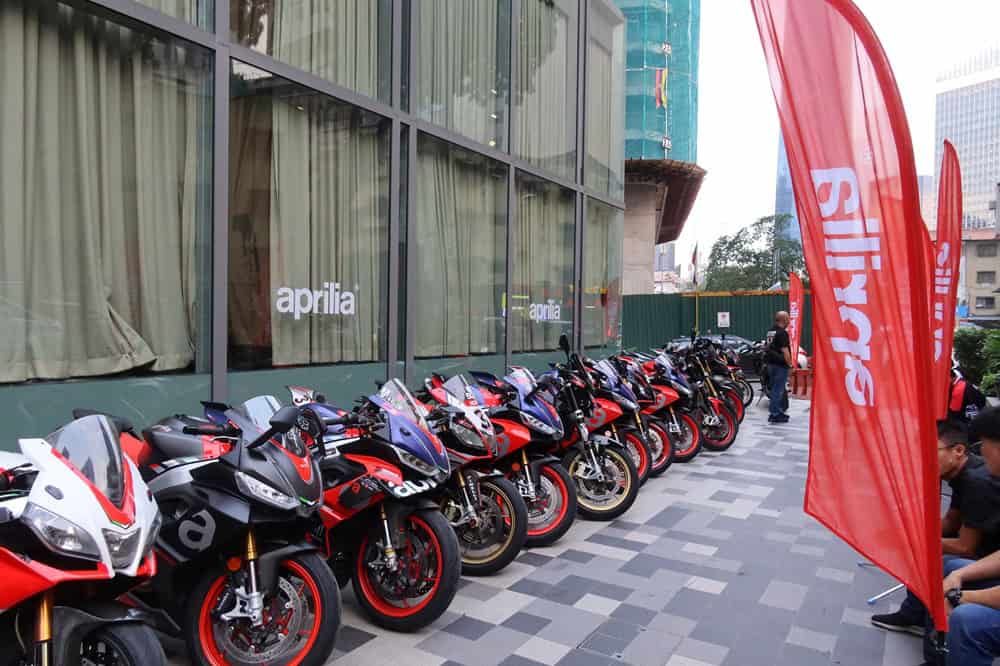
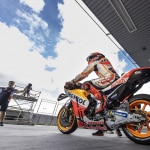
Aprilia bikes ready for test. Image courtesy of Jazgaz on Flickr
How does MotoGP testing work?
MotoGP tests usually run like a private version of a GP weekend – but without the crowds, race sessions, and media obligations.
The test focus generally depends on the time of year:
Can MotoGP riders test at any time?
Not freely – testing is heavily regulated.
Winter test ban + summer break:
Contracted riders are not allowed to test at all during:
The “14-day rule”
Even when testing is allowed, teams must not test at a circuit within 14 days of a MotoGP event at that same circuit (unless it’s an official test or Race Direction grants an exception).
“Grand Prix circuits” vs non-GP circuits
For testing rules, a Grand Prix circuit is any circuit on the current MotoGP calendar. If the calendar changes, any newly added circuit becomes a GP circuit and the same testing restrictions apply there.
Why do some manufacturers get more testing time than others?
MotoGP uses a “concessions” system to help struggling manufacturers catch up, based on constructors’ points.
For 2026, manufacturers sit in different concessions ranks – and that affects private testing, tyre allocation for development, and who can ride.
2026 concessions ranks (start of season):
What each concessions rank means (quick summary)
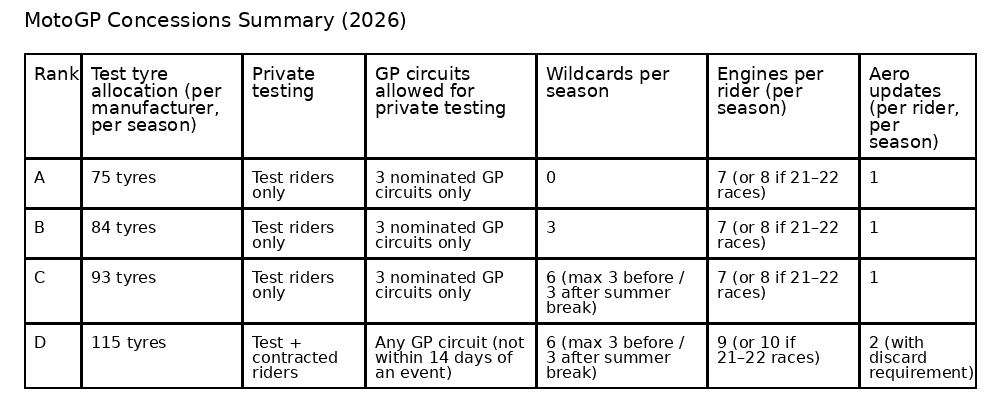
The tyre allocations have been reduced by over half compared to 2025 because of the upcoming switch of official tyre supplier from Michelin to Pirelli in 2027.
The aero discard requirement for Concession D is that they must discard one existing aero specification when choosing to utilise their second update.
To use the second, revised aero package, the manufacturer must surrender a previous version, meaning they can only have one "extra" (second) design active at any given time.
More information about wildcards below.
Who are the factory test riders in 2026?
Test rider line-ups can change, but the core names you’ll often see at shakedowns and private tests include:
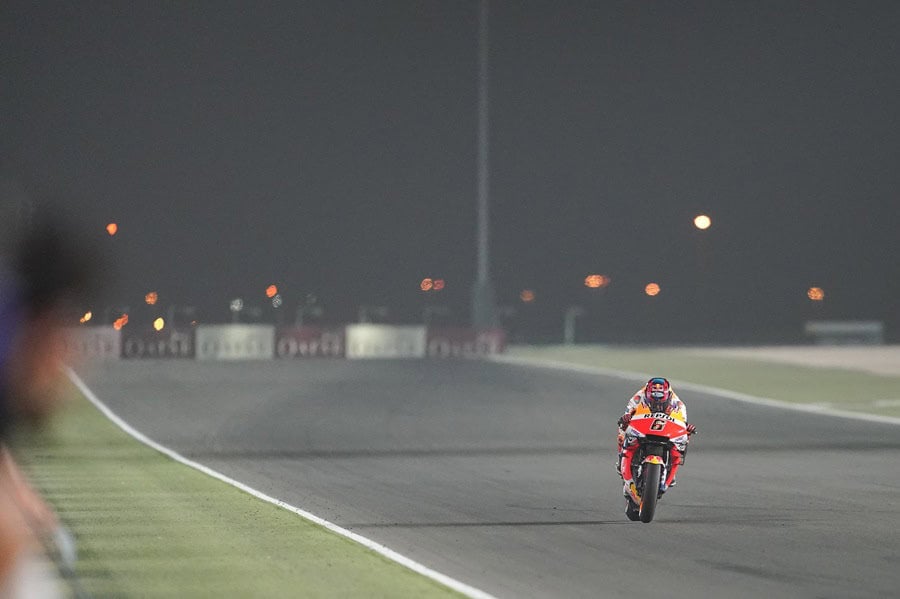
Stefan Bradl Qatar testing. Image courtesy of Box Repsol on Flickr
What is the format of a day of testing?
Typically, there is a morning and afternoon session on each day.
It works out to around 8 hours of available track time each day.
There is no format outlined as there is for race weekends.
Teams are free to set their own schedule across the 3 days and there is no limit on how much time they spend on the track.
The only restriction they face is the number of tyres provided for testing.
Usually, teams will have a checklist of what needs to be tested and assessed.
It is not possible to test absolutely everything at once so teams need to prioritise what will be tested on each given day.
However, if the weather is bad and prevents the sessions from going ahead, they are not replaced. It is simply bad luck.
For example, testing at Valencia in 2023 was cut short due to rain. Inclement weather is not always bad news though for it gives riders a chance to test and practice in wet weather.
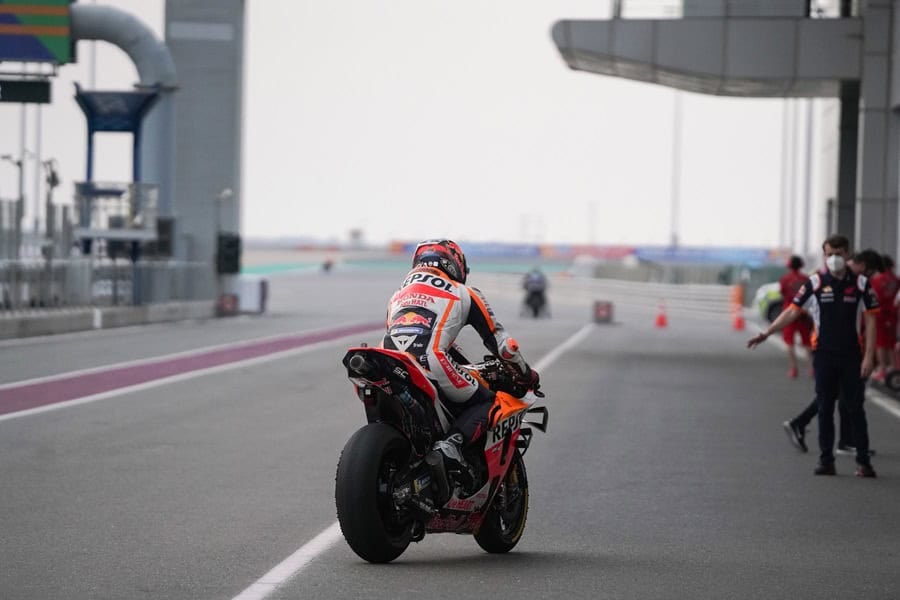
Stefan Bradl Qatar testing. Image courtesy Box Repsol on Flickr
Are test riders the same as wildcards?
Usually test riders will also be the wild card rider for that manufacturer.
While there is no rule that says the two must be the same, they often are.
Due to the changes to concession points and the rankings issued to manufacturers the wild card allowance of teams has been impacted.
For 2026 Ducati (Rank A) has 0 wildcards. Yamaha (Rank D) has 6. Aprilia, KTM and Honda (Rank C) have 6 each — with a maximum of 3 before and 3 after the summer test ban.
It is also important to note Wildcard riders are in addition to the normal riders on the grid.
This is different to a replacement rider who takes the place of a rider who cannot participate.
Wildcard riders need to be approved by Dorna ahead of time as there can be no more than 3 wildcard riders on the grid at any time.
This is just another aspect of planning that needs to be carefully monitored by the organisers.
What is the difference between practice and testing?
Practice is referred to as Rider Training or Track Familiarisation and is allowed at any time on any track as long as no GP race is scheduled within 14 days.
Rider training is regulated like all other aspects of premier class racing. However, teams have a little more freedom when it comes to rider training.
The rules state that for rider training MotoGP class bikes are not permitted. Essentially, they must use a standard production road-homologated motorcycle.
For safety reasons they are allowed to make some small changes but the Championship Technical Director must be notified of all changes and approve them.
This could include:
An interesting point to note about the rider training is when they use a road racing bike it may count as a test day for that manufacturer.
This rule means official riders have access to their MotoGP Class race bike on race weekends for practice, warmups, qualifying and racing only!
When you really think about it that is not a lot of time on those bikes outside of actual racing.
Just another reason to admire the talent the riders have!
Is testing broadcast?
Much of MotoGP is kept confidential and data is one of those things not made publicly available, but they do allow us to see the testing sessions and they are open to spectators.
It is not broadcast in the same way the race is. However, if you have a MotoGP Videopass you can watch the testing sessions on the official MotoGP platform.
And finally....
So there you have it, the rundown on MotoGP testing.
With one final reason to check out MotoGP testing being it gives us a chance to see some very famous names back on the track.
If you haven’t had a chance to follow testing check out the upcoming tests.